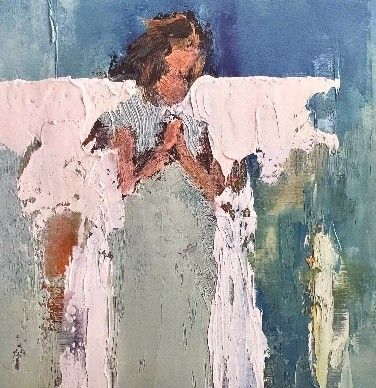
Masterpiece in Progress...
You are God’s handiwork—and He isn’t finished yet.
When we hear the word masterpiece, we often picture something flawless: a beautiful painting hanging in a museum, perfectly finished and admired by everyone who sees it. So when Christians say, “You are God’s masterpiece,” it can sometimes feel difficult to believe. If I’m God’s masterpiece, why do I have so many flaws? Why do I struggle with the things I struggle with? Why have I made so many mistakes? Why are there parts of myself I wish were different?
Perhaps we misunderstand what makes something a masterpiece. A masterpiece is not valuable because every part of it is perfect. It is valuable because of the artist who created it, the intention with which it was made, and the love, thought, and purpose poured into its creation.
You Are His Handiwork
Ephesians 2:10 tells us, “For we are his workmanship, created in Christ Jesus for good works, which God prepared beforehand, that we should walk in them.” Depending on the Bible translation you use, the word translated as workmanship may also appear as handiwork or masterpiece. The original Greek word is poiēma, meaning something that has been made—a work of the maker.
That gives us a beautiful way of understanding ourselves: you are something God made. You were not mass-produced. You were not an afterthought. God did not accidentally give you your personality, your particular gifts, your sensitivity, your intensity, your intellect, your sense of humor, your capacity to love, or the countless little things that make you distinctly yourself. God intended you.
Psalm 139 expresses this same truth: “For you formed my inward parts; you knitted me together in my mother’s womb.” The psalmist responds, “I praise you, for I am fearfully and wonderfully made.” Scripture does not describe our creation as random or impersonal. It describes a God who knows us intimately and creates with intention.
God Is an Artist
In his Letter to Artists, Pope John Paul II reflected on God as the original Creator and wrote that every person is entrusted with the task of making his or her life “a work of art, a masterpiece.” Whether or not we come from the same Christian tradition as John Paul II, the image is a powerful one because it reflects something we see throughout Scripture: God is both our Creator and the One who continues to work within us.
That means a masterpiece can still be in progress.
God created you intentionally, but He did not create you as a finished product who would never struggle, change, fail, learn, suffer, or grow. We are created in the image of God, but we also live in a fallen world. We carry wounds. We develop unhealthy patterns. We make poor choices. Other people hurt us, and sometimes we hurt other people. There may be parts of ourselves that genuinely need healing and change. None of that means the Artist made a mistake.
Imperfection Is Not the Same as Worthlessness
Sometimes we unconsciously believe that our worth rises and falls according to how well we are doing. We may believe that we are lovable when we are kind, valuable when we are productive, good when we make the right decisions, worthy when other people approve of us, beautiful when our bodies look a certain way, or acceptable to God when we are behaving well.
The Gospel tells us something radically different: our worth is not something we earn through our performance. We are created in God’s image and deeply loved by Him. Romans 5:8 reminds us that “while we were still sinners, Christ died for us.” God did not wait for us to become polished, healed, obedient, or impressive before loving us.
This doesn’t mean everything we do is good. It doesn’t mean sin doesn’t matter or that we never need to change. Christianity takes repentance and transformation very seriously. But there is an enormous difference between saying, “There are things in me that need healing,” and believing, “There is something fundamentally wrong with me.” There is a difference between saying, “I did something wrong,” and believing, “I am a mistake.” God may want to change something in you without wishing He had created someone instead of you.
Think About a Handmade Work of Art
Imagine a beautiful piece of handmade pottery. It may have slight variations in its shape. You might see evidence of the hands that formed it. Its glaze may be darker in one place and lighter in another. It may not have the mathematical uniformity of something produced by a machine. Those differences do not make the piece meaningless or worthless. They remind us that it was made by someone.
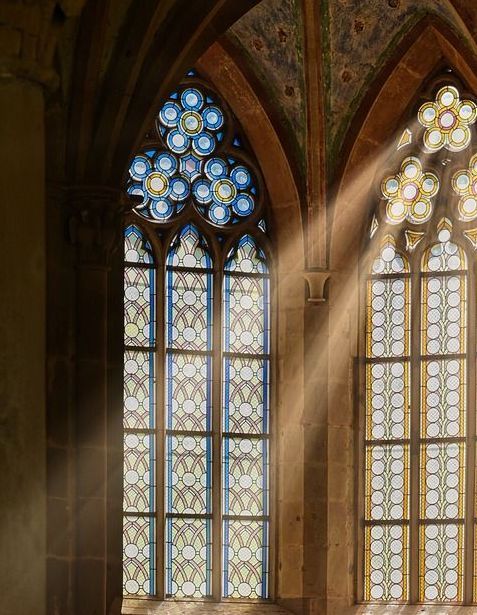
Or imagine an old stained-glass window. Some pieces are brilliantly colored, while others are dark. Some are irregularly shaped. Viewed individually, a particular piece might not seem especially beautiful, but the artist knows where it belongs. The beauty is revealed when we step back and see the whole.
We often examine ourselves one piece at a time: I don’t like this part of my personality. I wish this hadn’t happened to me. I wish I weren’t so sensitive. I wish I hadn’t made that mistake. I wish I looked different. I wish my story were different. And while we are staring at one small piece, God sees the whole window.
Your Wounds Are Not Your Identity
There is another important distinction: not everything that has happened to you was God’s design. Sometimes Christians say, “Everything happens for a reason,” in a way that can make it sound as though every painful experience was deliberately chosen by God. But Scripture gives us a more complicated picture. Human beings have free will. Sin is real. People hurt one another. Bodies become sick. Relationships break. We live in a world that is not yet as it should be.
Yet Scripture repeatedly shows us a God who is able to redeem what is broken. Romans 8:28 tells us that God works in all things for the good of those who love Him. That does not mean that everything that happens is good. It means God is capable of working even within what is not good.
God can redeem and restore. He can bring beauty out of places that once held tremendous pain. A scar is not proof that the original creation was worthless. A scar tells us that there has been a wound and that healing has taken place. Your wounds may become part of your story, but they do not get to define your worth.
The Artist Is Still Working
Perhaps one of the most freeing things we can understand is that God is not finished with us yet. Philippians 1:6 tells us that “he who began a good work in you will bring it to completion.” You do not have to look at yourself today and decide that this is the final version.
The impatient person can become more patient. The frightened person can become courageous. The person who has spent years pleasing everyone else can learn healthy boundaries. The person carrying shame can learn to receive grace. The person who has been wounded can heal. The person who has sinned can repent and begin again. The person who has forgotten who she is can rediscover her identity in Christ.
Christianity is not a story about proving that we were perfect all along. It is the story of creation, brokenness, redemption, and restoration. God creates. Sin wounds. Christ redeems. Grace transforms. Through all of it, the Artist does not abandon His work.
Maybe You Don’t Need to Become Someone Else
Many of us spend years trying to construct a version of ourselves that we believe will finally be worthy of love: prettier, thinner, smarter, more successful, less emotional, more agreeable, more impressive, more productive, less needy, more spiritual, or less complicated.
But healing does not necessarily mean becoming a completely different person. Sometimes healing means allowing God to uncover the person He intended before fear, shame, comparison, wounds, sin, and other people’s expectations began telling us who we were supposed to be. The goal isn’t perfection. The goal is wholeness—becoming more fully the person God created you to be.
2 Corinthians 3:18 describes the Christian life as a process of being transformed into the image of Christ “from one degree of glory to another.” Transformation is a process. God works patiently. Growth happens over time. The fact that there is still work to be done does not mean the work already present has no value.
You Are Deliberately and Lovingly Made
So when you hear the words You are God’s masterpiece, don’t hear, “Everything about me is perfect.” Instead, hear this: I was wanted. I was made deliberately. My life has meaning. My dignity does not disappear when I struggle. My mistakes are things I have done; they are not the definition of who I am. My wounds are part of my story, but they are not the author of my story. There are things in me God wants to heal and transform, and the Artist has not walked away from His work.
You don’t have to be flawless to be God’s workmanship, and you don’t have to be finished to be His masterpiece. You can be deeply loved by God and still have growing to do. You can be His handiwork and still need healing. You can have weaknesses and still have purpose. You can have a complicated story and still be a beautiful work of God.
Perhaps that is a better way to understand a masterpiece: not something that was always perfect, but something deliberately conceived, lovingly made, patiently worked upon, and treasured by the Artist who created it.