You can love God, take your faith seriously, and still feel as though everything depends on you. You pray, serve, examine your conscience, and try to become a better person. Yet beneath those good efforts, a quieter belief may be driving you: I need to get myself together before I can rest.
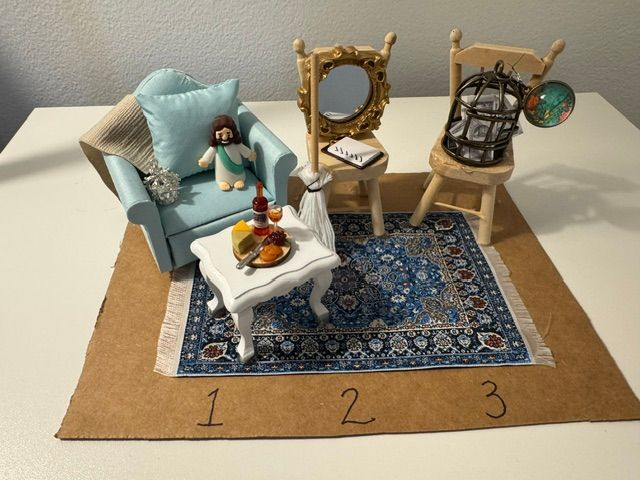
Fr. Michael Voithofer’s Three Chairs analogy offers a helpful way to recognize that interior struggle. Using three chairs to represent the Kingdom of the World, the Kingdom of Self, and the Kingdom of God, he invites us to notice the place from which we are living. His teaching asks us to look beneath our behavior and consider what we believe about God, ourselves, and the source of our security.
The chairs represent postures of the heart. They are not personality types or permanent labels. We may begin the morning trusting God, slip into trying to control everything by lunchtime, and return to trust that evening. The question is simple: Where am I sitting right now?
Chair Three: The Kingdom of the World
Chair Three represents looking to the world for the fulfillment and security we were created to find in God. Approval, achievement, possessions, pleasure, or status may become the foundation on which we build our lives. We may not yet recognize the relationship God is inviting us into.
Many of these things have a good and rightful place. The difficulty comes when we ask them to carry our identity or give us lasting peace. Approval shifts, achievements fade, and circumstances change. A life built around them requires us to keep searching for the next thing that will finally be enough.
Fr. Michael’s invitation is to recognize our need for God and encounter His love. The chairs also help us examine our own hearts: even a person who practices the Christian faith can find herself depending heavily on admiration, comfort, or success.
Chair Two: The Kingdom of Self
Chair Two can be especially familiar to conscientious people. We may sincerely love God and want to do what is right while quietly relying on our own performance to make us acceptable to Him. Fr. Michael calls this the “me project”: the exhausting effort to turn ourselves into someone we believe God can finally be pleased with.
From this chair, our inner dialogue might sound like: I should be further along. I need to pray more, do more, and stop struggling. Once I fix this part of myself, I’ll be able to relax. Even spiritual growth can become another arena in which we measure our adequacy.
Fr. Michael describes the difference through the image of God as Father versus God as CEO. When we approach Him like a CEO, we arrive with a spiritual résumé, hoping our record will secure His approval. When we approach Him as Father, we can come honestly, including with the parts of our lives that need His mercy.
The same outward practice can arise from either posture. Two people may pray, go to church, serve their congregation, or work on a difficult habit. One is responding to love; the other is trying to establish worth through achievement. Often, both motives are present within the same person.
Chair Two also affects our relationships. When we are preoccupied with whether we are doing enough, another person’s needs may feel like an additional test. Criticism can threaten our sense of worth. Someone else’s success can make us feel behind. Receiving God’s love gives us more freedom to listen, apologize, and care for others without making every encounter a verdict on ourselves.
Chair One: The Kingdom of God
Chair One represents life rooted in God’s love. Here, we receive our identity as His beloved sons and daughters and trust that His grace is at work within us. We bring Him our weaknesses instead of treating them as reasons to keep our distance. We can acknowledge what needs to change without making our worth depend on how quickly we change it.
Fr. Michael connects this chair with the father’s welcome in the story of the prodigal son. The returning son has squandered his inheritance and comes home prepared to ask for a servant’s place. His father meets him with an embrace, a robe, a ring, sandals, and a feast - all while still smelling like pigs. The welcome reveals the father’s heart: his son’s return is cause for joy.
Sitting in Chair One means allowing that welcome to shape our relationship with God. We repent, accept responsibility, and cooperate with grace from within a relationship of love. Our prayer becomes a place to receive help. Confession becomes an encounter with mercy. Our good works grow from the love we have received.
In daily life, this posture might sound like: "Father, this is difficult, and I need Your help. Show me the next faithful step." We still have responsibilities, unanswered questions, and painful circumstances. Trust gives us somewhere to bring them.
Returning to the Father
One of the easiest ways to turn this teaching into another “me project” is to demand that we remain in Chair One perfectly. We notice fear or control and immediately criticize ourselves: Now I’m failing at surrender, too.
A gentler response begins with noticing. I’m trying to carry everything myself again. I’m treating this mistake as proof that I’m unworthy. I’m looking for reassurance in everyone’s approval. That awareness can become an invitation to prayer: "Father, help me receive Your love here. Jesus, I trust in You."
Then we take the next responsible step. We make the apology, complete the task, set the boundary, ask for support, or allow ourselves to rest. Surrender includes cooperating with God’s grace in the concrete circumstances of our lives.
In applying this analogy in counseling, it is also helpful to remember that feelings do not reliably identify our chair. Anxiety, grief, exhaustion, and depression can have many causes. A person can feel deeply distressed while faithfully entrusting herself to God. The analogy invites reflection on our relationship with Him; it is not a measure of mental health or holiness.
Fr. Michael’s teaching brings us back to a question we can carry into ordinary moments: Am I trying to secure my worth, or am I allowing God’s love to support the next thing I do? We can ask it while washing dishes, navigating a hard conversation, beginning our work, or facing a weakness we wish were already healed.
The invitation is to return to the Father again and again, bringing our unfinished lives with us. From that place of belonging, we learn to receive His grace and offer the love we have received.
Inspired by Fr. Michael Voithofer’s Three Chairs teaching. Watch his Three Chairs video series here.